
Why and How Clinical Hypnosis Works.
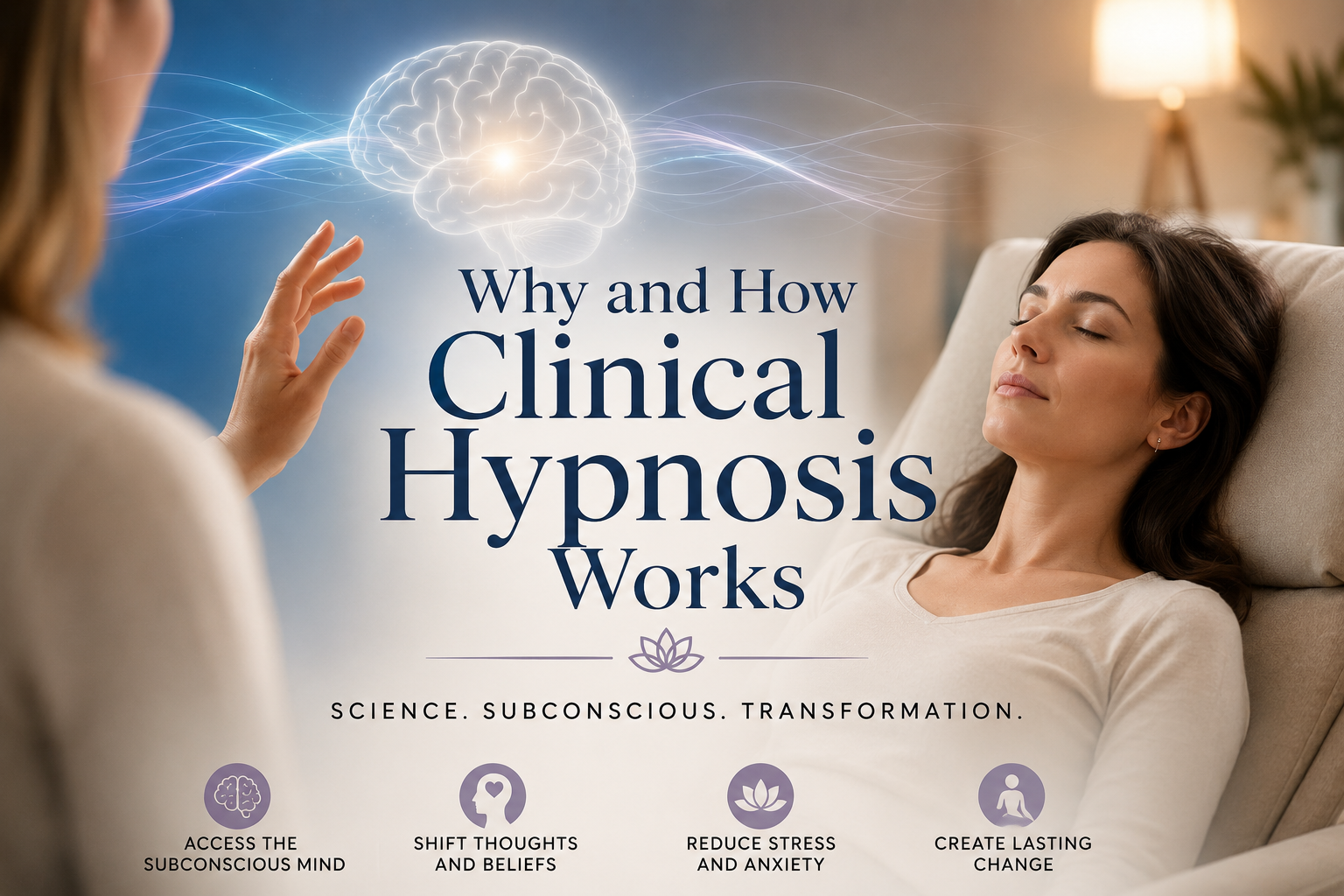
Why Change Is Hard: The Neuroscience of Homeostasis and Neuroplasticity
Most people who come to hypnotherapy have already tried to change. They have read the books, made the plans, set the goals, and talked through the problem in therapy. And yet the anxiety returns. The cigarette finds its way back into their hand. The procrastination loop starts again on Monday morning. It is not a failure of willpower. It is a conflict between two fundamental properties of the mind: homeostasis and neuroplasticity. Understanding how these two forces interact explains why hypnosis can succeed where other approaches plateau.
Homeostasis: The Mind's Defense of the Status Quo
In physiology, homeostasis refers to the body's relentless drive to maintain internal equilibrium. When your temperature rises, you sweat. When blood sugar drops, you feel hunger. The body detects deviation and automatically corrects it. What is less obvious is that the same principle operates psychologically.
Psychological homeostasis is the subconscious mind's tendency to preserve your current emotional and behavioral set point, even when that set point is causing you pain. As researchers note, the conservative constancy principle of homeostasis is a significant instigator of resistance to change and cure. Your subconscious does not judge whether a pattern is healthy; it judges whether it is familiar. Familiarity reads as safety to the nervous system.
This is why insight alone rarely produces lasting change. You can rationally understand that smoking damages your lungs, that anxiety about a presentation is disproportionate, or that a particular trauma response no longer serves you. But the subconscious, operating below the level of language and logic, maintains the habit or reaction because it knows how to execute it efficiently. Change requires more energy and presents more perceived risk than repetition. In this sense, homeostasis is not malevolent; it is protective. But it is also the force that keeps people stuck.
For example, a high-performing executive may intellectually commit to better sleep boundaries, yet find themselves answering emails at midnight. The conscious mind made a decision; the subconscious mind preserved the familiar vigilance because it has learned to equate availability with safety and success. The same mechanism operates in anxiety loops, where the nervous system has calibrated to a certain level of arousal and resists the unfamiliar calm that therapy might introduce.
Neuroplasticity: The Brain's Capacity to Rewire
If homeostasis is the brake, neuroplasticity is the accelerator. Neuroplasticity is the brain's ability to reorganize itself by forming new neural connections throughout life. Once considered fixed in adulthood, the brain is now understood to be malleable, responsive to experience, thought, and focused attention.
Stanford researchers using functional MRI have demonstrated that hypnosis produces distinct alterations in brain activity and connectivity. During hypnotic states, the dorsal anterior cingulate cortex shows altered activation patterns associated with reduced self-monitoring and absorption in experience. At the same time, functional connectivity increases between executive and salience networks, essentially creating stronger communication pathways between parts of the brain that govern attention, body awareness, and cognitive control. Other neuroimaging studies have found that hypnotic induction induces plastic changes in neuronal activity even without specific therapeutic suggestions being delivered.
What this means practically is that the brain under hypnosis is not passive. It is in a uniquely receptive state where new patterns can be encoded. Neuroplasticity makes the rewiring possible; focused attention determines what gets rewired. Every repeated thought, imagined scenario, or emotionally charged suggestion during hypnosis is a vote for a new neural pathway. Over time, with reinforcement, that pathway becomes the default rather than the exception.
How Hypnosis Bridges the Two
Hypnotherapy works because it speaks directly to the system that homeostasis is trying to protect. Instead of fighting the subconscious, hypnosis invites it into a state of concentrated focus where the usual vigilance is temporarily lowered. The critical, evaluative mind—the part that says, "This won't work" or "This feels unsafe"—steps back. In that window, suggestions and therapeutic imagery can be introduced without triggering the homeostatic alarm.
This is where the tools of hypnotherapy become precise instruments. Therapeutic imagery engages the sensory and emotional brain, creating vivid experiential memories of a desired state. Neuro-Linguistic Programming (NLP) techniques restructure the internal language patterns that maintain a problem. Mindfulness-based suggestions strengthen the prefrontal capacity to observe rather than react. Together, these tools leverage neuroplasticity to build new emotional and behavioral defaults while respecting the subconscious need for safety.
Think of it this way: homeostasis is a thermostat set to a particular temperature. Talk therapy tries to convince you the room is too hot. Hypnosis walks over and resets the thermostat.
What This Means for Your Specific Goals
If you struggle with anxiety, the homeostatic set point may be calibrated to hypervigilance. Hypnosis can lower that baseline by creating new associations between safety and calm, essentially recalibrating the nervous system's default state.
If you are trying to stop smoking, the neural network linking stress to the cigarette ritual is deeply grooved. Hypnosis interrupts that sequence at the subconscious level and installs a different response to the trigger, using the same plasticity that formed the habit in the first place.
If you are an executive or high-performer seeking better focus or decision-making under pressure, hypnosis can strengthen the functional connectivity between attention networks and reduce the dorsal anterior cingulate "noise" that produces overthinking and second-guessing. The change is not motivational; it is neurological.
A Life Coach for the Subconscious Mind
Ultimately, a skilled hypnotherapist functions as a strategist for the part of your mind that operates outside your conscious awareness. While a traditional coach or therapist works with the thinking, planning, rational self, a hypnotherapist works with the deeper architecture that actually executes behavior. The goal is not to override the subconscious but to negotiate with it, offering new patterns that feel as safe and automatic as the old ones.
If you are tired of trying to out-willpower your own mind, the issue is not discipline. It is that you have been trying to change a subconscious program using conscious tools. Hypnotherapy simply gives you access to the code.
I welcome you to call or message me for a free consultation to ask questions and explore whether my hypnotherapy services might be right for you.
You are not broken. You are becoming. Your free Shift Session is a simple way to start working with, instead of against, your subconscious mind.