
What Does Clinical Hypnosis Feel Like in a Session
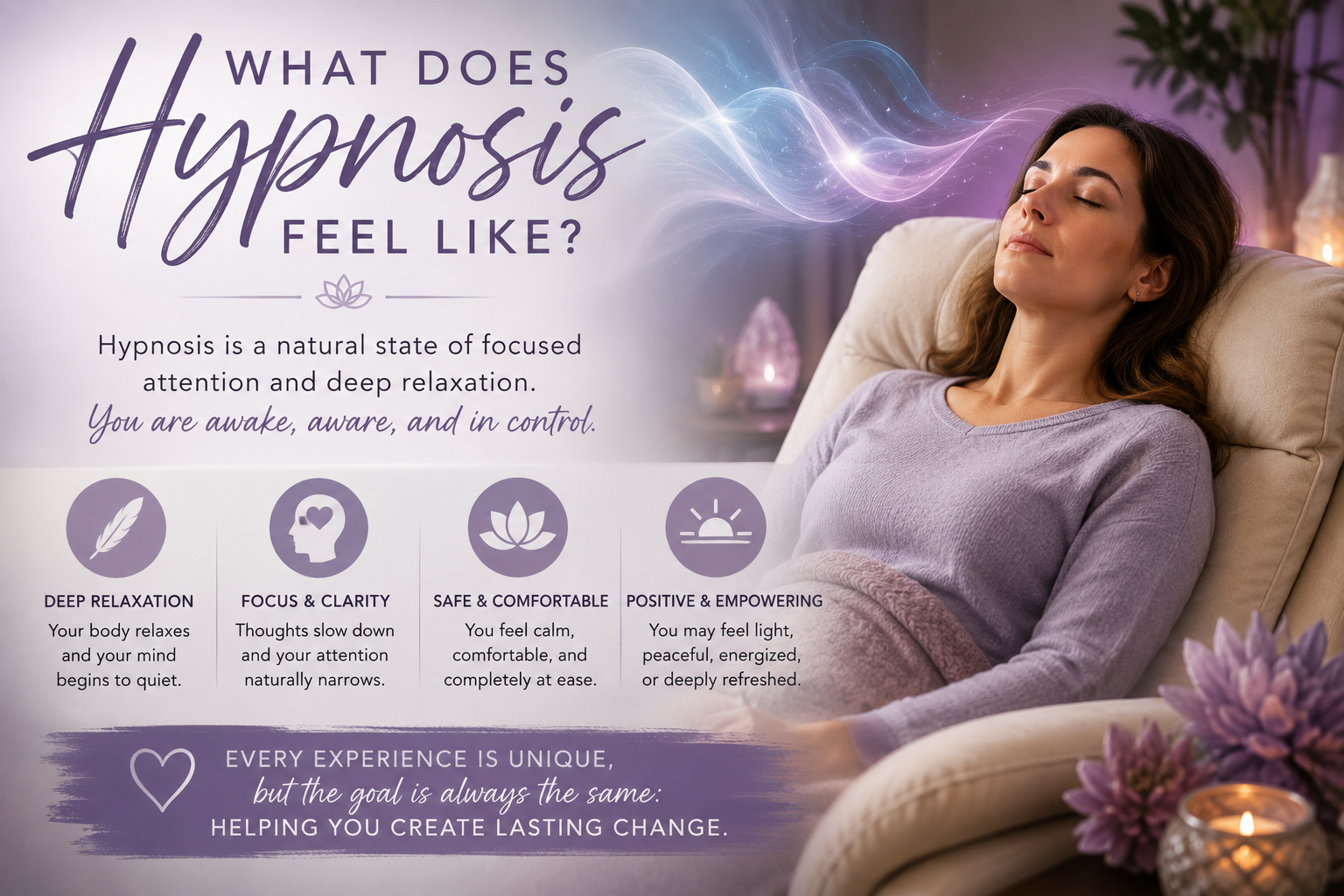
Hypnosis can feel light, comfortable and relaxing.
What Does Hypnosis Feel Like?
Hypnosis is one of the most misunderstood tools in mental health and performance care. Many people form an impression of it from movies, stage shows, or exaggerated media portrayals that have little in common with clinical practice. In reality, hypnosis is a structured state of focused attention that feels familiar, safe, and intentionally directed toward a specific therapeutic goal.
The Physical Experience
Most people describe hypnosis as a state of deep physical relaxation coupled with mental alertness. Your body may settle into the chair as muscle tension releases, while your mind remains quietly focused on the therapist's voice or on an internal image. Some people notice a pleasant heaviness in their limbs. Others feel a light, floating sensation or a gentle warmth spreading through their hands and feet. Breathing typically slows. Thoughts may narrow to a single stream rather than the usual scattered rush.
The sensation is often compared to the drowsy, comfortable state just before falling asleep, or to the focused absorption of reading a compelling novel, driving a familiar route, or completing a task in flow. You are not unconscious. You are simply holding your attention in one place with less interference from external distractions or internal chatter.
Because each nervous system responds differently, there is no single correct way hypnosis must feel. Some clients experience profound physical relaxation. Others feel little change in their bodies but notice a distinct quieting of mental noise. Both responses are normal and clinically useful.
Control, Safety, and the Myth of Vulnerability
A common concern is whether hypnosis involves surrendering control. It does not. Clinical hypnotherapy is designed to increase your awareness and intentional self-regulation, not diminish it. You remain an active participant throughout the session. You can hear what is being said, understand the suggestions offered, and choose how you respond. You cannot be compelled to reveal information you wish to keep private, nor can you be directed to act against your values or judgment.
You also cannot become stuck in hypnosis. You may open your eyes or return to ordinary awareness at any point. At the end of a session, the therapist guides you back to full waking alertness so that you feel clear, grounded, and ready to resume your day. Even without that guidance, the mind naturally transitions back to normal awareness or into ordinary sleep. Hypnosis is a temporary, self-limited state of focused attention.
Awareness and Memory
Most clients are surprised by how aware they remain. You are not unconscious or "out." You typically hear the therapist's voice, understand the process, and can speak when invited. Some people remember every word. Others become so relaxed that portions of the experience feel distant or dreamlike afterward. Both are normal.
Your awareness does not shut down; it redirects. If something requires your attention—a sound in the environment, physical discomfort, or a suggestion that does not fit—you remain capable of noticing and responding. Hypnosis is best understood as a focused and relaxed state of awareness, not a state of unawareness.
The "Blank Mind" Concern
Clients sometimes worry that their mind must become completely still for hypnosis to work. This is not the case. Thoughts may still arise. You might briefly think about your schedule, notice a sound, or wonder whether you are doing it correctly. None of this indicates failure. The process is more like reading a book: your attention may drift for a moment, then naturally returns to the page. Hypnosis does not require perfect concentration; it requires only a willingness to follow guidance and remain open to the experience.
What Clients Notice Afterward
Responses vary. Some people leave a session with an immediate sense of calm, clarity, or emotional lightness. Others notice more gradual shifts in the days that follow, such as a calmer response to previously triggering situations, a more supportive internal dialogue, greater awareness before an old habit activates, or an improved ability to relax. Change is not always dramatic. It often unfolds through small, meaningful adjustments as the mind continues integrating the work.
Conclusion
Many first-time clients arrive concerned that they will not be able to enter hypnosis or recognize when it is happening. They are usually surprised by how natural the state feels. You remain yourself throughout—aware, capable, and in control—while allowing your attention to become calm, focused, and receptive to the changes you have chosen. Hypnosis is not about losing yourself. It is an opportunity to become more deeply connected to your own internal resources and capacity for meaningful change.